BASANT AND THE BUSINESS OF CULTURE
By Muhammad Azfar Ahsan
In this opinion piece, “Basant & the Business of Culture,” the writer examines
how the festival’s revival can be leveraged as a structured economic and
cultural opportunity. It highlights Basant’s potential to generate employment,
boost tourism, invigorate small businesses, and enhance Pakistan’s soft
power on the global stage.
The piece emphasizes the importance of professional management,
enforceable safety standards, and long-term strategic planning, illustrating
that when tradition is combined with foresight, Basant can evolve into a
sustainable cultural economy that strengthens social cohesion, drives
commerce, and projects a vibrant, confident image of Pakistan to the world.
February 6, 2026
Published in ProPakistani on February 6, 2026
Ajab rang hai basant ka Lahore mein, har simt patangon ki parwaz hai.
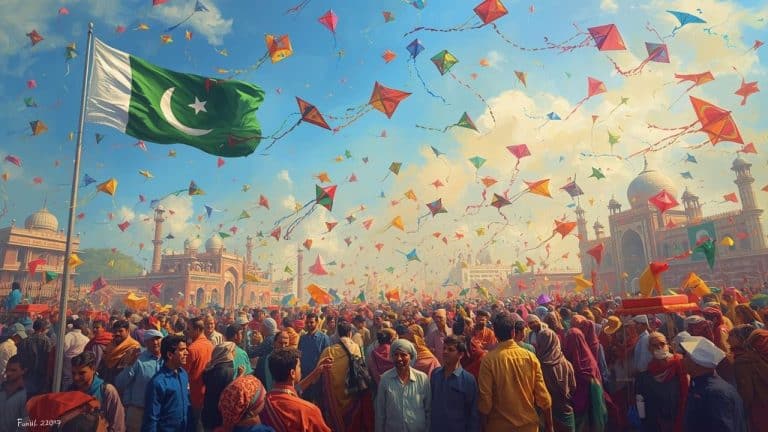
Faiz uses Basant as a metaphor for renewal, beauty, and collective joy, rooftops alive, skies crowded with colour, and a city briefly forgetting its divisions. His verse captures what many feel about Lahore: that its culture does not live only in monuments or history books, but in shared moments, laughter on terraces, music in the lanes, and kites stitching neighbours together across the sky.
I have often reflected that economic revival requires more than rhetoric; it requires confidence, continuity, and investment in activities that generate opportunity across sectors. When Pakistan attracts capital consistently, when businesses see predictable policy, and when culture and commerce reinforce each other, growth follows. In recent years, Pakistan’s foreign direct investment landscape has faced persistent challenges. In fiscal year 2024-25, the country attracted roughly USD 1.82 billion in FDI, evidence that international investors still see opportunity here. Yet, broader diversification and sustained engagement are essential if Pakistan is to realise its full economic potential.
Cultural economies are part of this broader growth story. Festivals, heritage, and creative industries are not peripheral luxuries; they are proven economic multipliers. They stimulate tourism, energise small businesses, create employment, and strengthen city brands internationally. Viewed through this lens, Basant is not merely a tradition. It represents a platform for commerce, jobs, and international engagement, precisely the kind of integrated growth Pakistan urgently needs.
Basant, Lahore’s iconic kite festival, is woven deeply into the city’s cultural fabric. For generations, it has brought together people across social classes, faiths, and ethnicities, creating a rare and organic sense of social cohesion. Rooftops turn into gathering places, skies into shared canvases, and strangers into neighbours, if only for a day. It is not simply a celebration; it stands among Pakistan’s most undervalued economic and soft-power assets.
In Lahore, kites have always been more than paper and string. They are verses written across the sky, carrying laughter from rooftops, the rhythm of dhols, and the quiet pride of a city that has mastered the art of living. From its winding bazaars to its Mughal gardens, Lahore’s culture rises like colour into the air.
Long confined to emotional debate and reactive policymaking, Basant deserves to be reimagined as a strategic national opportunity, anchored in governance, regulation, and long-term planning. At a time when nations compete as much on perception and lived experience as on economic indicators, few traditions offer Pakistan such natural global appeal. Basant is not merely a festival; it is a reminder of Lahore’s enduring spirit and Pakistan’s capacity for beauty, unity, and cultural diplomacy.
As the country once again contemplates its revival, this moment should not be framed as nostalgia but as a deliberate policy choice. With clear safety standards, enforceable regulations, and a predictable multi-year roadmap, Basant can be transformed into a flagship cultural event, generating hundreds of millions of dollars annually while projecting a confident, plural, and vibrant image of Pakistan to the world. Even a conservative capture of tourism, hospitality, and informal-sector activity during a regulated festival window could yield substantial fiscal and employment gains.
Global experience supports this case. Iconic festivals such as Rio Carnival, Oktoberfest, and the Dubai Shopping Festival generate billions of dollars annually, boost tourism, create jobs, and reinforce national identity. The Dubai Shopping Festival 2025 alone reportedly generated over USD 8 billion, attracted more than 10 million visitors, and produced a 25-40% revenue increase for small and medium enterprises.
Across the region, festival economies play a similarly powerful role. India’s annual festival season contributes an estimated USD 50 billion in spending across retail, tourism, hospitality, and seasonal employment, with Diwali alone driving record retail sales and millions of temporary jobs. In Bangladesh, economic activity surges around Eid-ul-Fitr and Pohela Boishakh, generating significant turnover for hotels, transport, artisans, and informal vendors. These examples demonstrate that when culture is professionally managed, it becomes a scalable economic asset.
There is no structural reason why Lahore, with its deep cultural roots, history, and global recognition, cannot replicate, or even surpass, such successes. With professional management, robust regulation, and modern safety measures, a revived Basant could evolve into a billion-dollar annual economic activity within a few years, while generating tens of thousands of direct and indirect jobs across tourism, hospitality, crafts, logistics, media, and the creative economy.
From an economic perspective, the case for Basant is compelling. Cultural festivals worldwide function as powerful multipliers. Tourism, transport, food, textiles, media, entertainment, and the informal sector all experience sharp demand. Hotels reach peak occupancy, restaurants expand capacity, artisans find steady work, and cities witness commercial activity that extends well beyond the event itself.
Pakistan’s challenge, however, has never been cultural potential; it has been governance. Ad-hoc bans, reactive decisions, and fear-driven policymaking have undermined continuity and investor confidence. If Basant is to succeed, it must be removed from emotional binaries and placed firmly within the domain of professional festival management.
Protection of life must remain non-negotiable. But fear cannot be allowed to paralyse governance indefinitely. Safety concerns, often cited as justification for permanent prohibition, must be addressed decisively and intelligently. The solution lies in regulation, not bans. Certified kite manufacturing, approved materials, designated flying zones, height restrictions, defined timelines, emergency preparedness, drone monitoring, and strict penalties can significantly mitigate risk. Innovation and accountability, not paralysis, must guide policymaking.
Beyond economics, Basant is a powerful instrument of cultural diplomacy and soft power. It showcases Pakistan’s pluralism, creativity, traditional attire, cuisine, music, craftsmanship, and hospitality. Many foreign visitors who once experienced Basant in Lahore carried those memories for life. Culture often succeeds where official statements fail, and Pakistan urgently needs positive global narratives that transcend crisis-driven headlines.
What we now require is a clearly articulated five-year strategic roadmap, jointly developed by federal and provincial governments, city administrations, tourism authorities, private-sector partners, and cultural stakeholders. This roadmap should define festival zones, infrastructure upgrades, public-private partnerships, international marketing, diaspora engagement, safety certification, and strict enforcement mechanisms. Integration with heritage tourism, food festivals, music events, and cultural exhibitions would further amplify Basant’s economic impact.
As Faiz reminded us, hope is not inherited; it is built patiently. At a time when nations compete not only on GDP figures but on perception and cultural confidence, Pakistan must learn to recognise its own quiet strengths. If stewarded with professionalism, Basant can emerge as one of Pakistan’s most valuable annual assets, economically productive, socially unifying, and globally affirming. The choice before policymakers is simple: tend this living heritage with wisdom and let it fly, or allow hesitation to ground a festival meant for the sky.

MUHAMMAD AZFAR SHAH
Articles